.png)
Americans love to treat themselves. But the food industry is missing a big reason why.
Data shows that people are looking for comfort. Who is going to create that feeling?
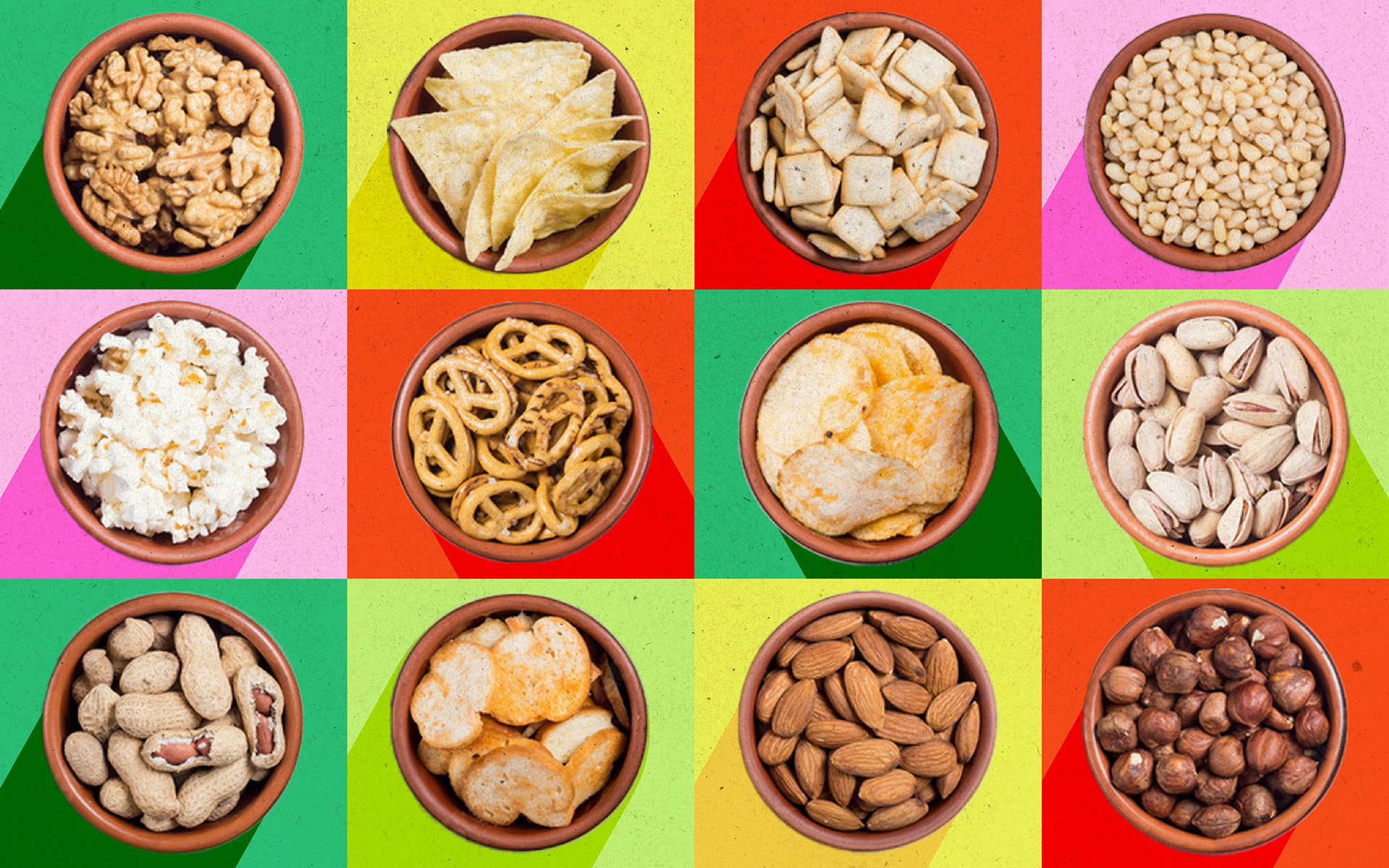
For most Americans, grocery shopping carries emotional weight. Maybe you’ve felt this way, when you think of someone—maybe yourself—who deserves a little treat. You pick up a product, maybe cookies, or grapes, or fresh sausage. You scan it over. It’s a little more than you’d usually spend, but something tells you it’s worthwhile.
Joy in the Grocery Aisle
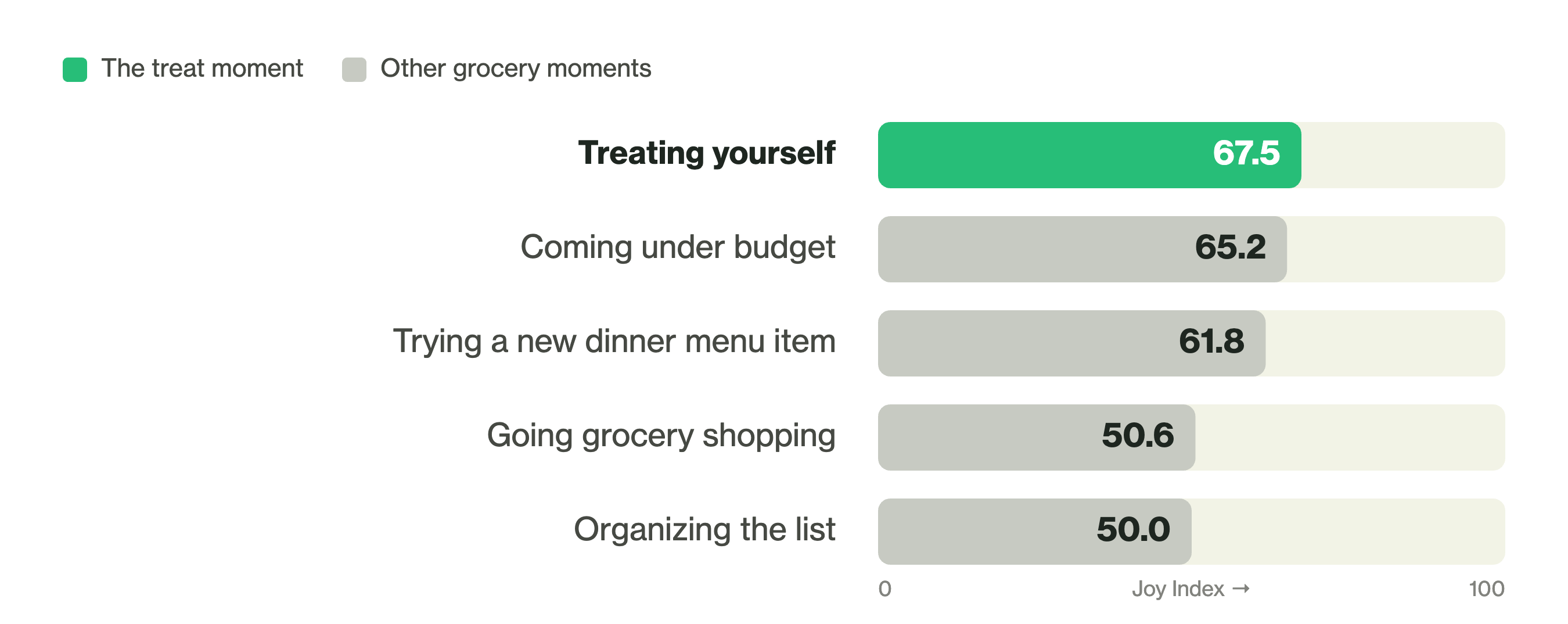
Source: PETERMAYER Brand Joy Lab, 2026 · n=1227
According to our Brand Joy Lab, this is the strongest positive moment we experience in the grocery aisle. Treating yourself to something fun or yummy at the grocery store scores a Joy Index of 67.5 out of 100—17 points above the baseline joy of the trip itself. This is about the same level of joy we get from anticipating an upcoming vacation or taking a relaxing bath.
This moment represents the core emotional payoff of a ritual that millions of Americans perform every single week. The question is…why? Why does treating ourselves and others bring such joy? And what are brands missing that could change the way people feel about them?
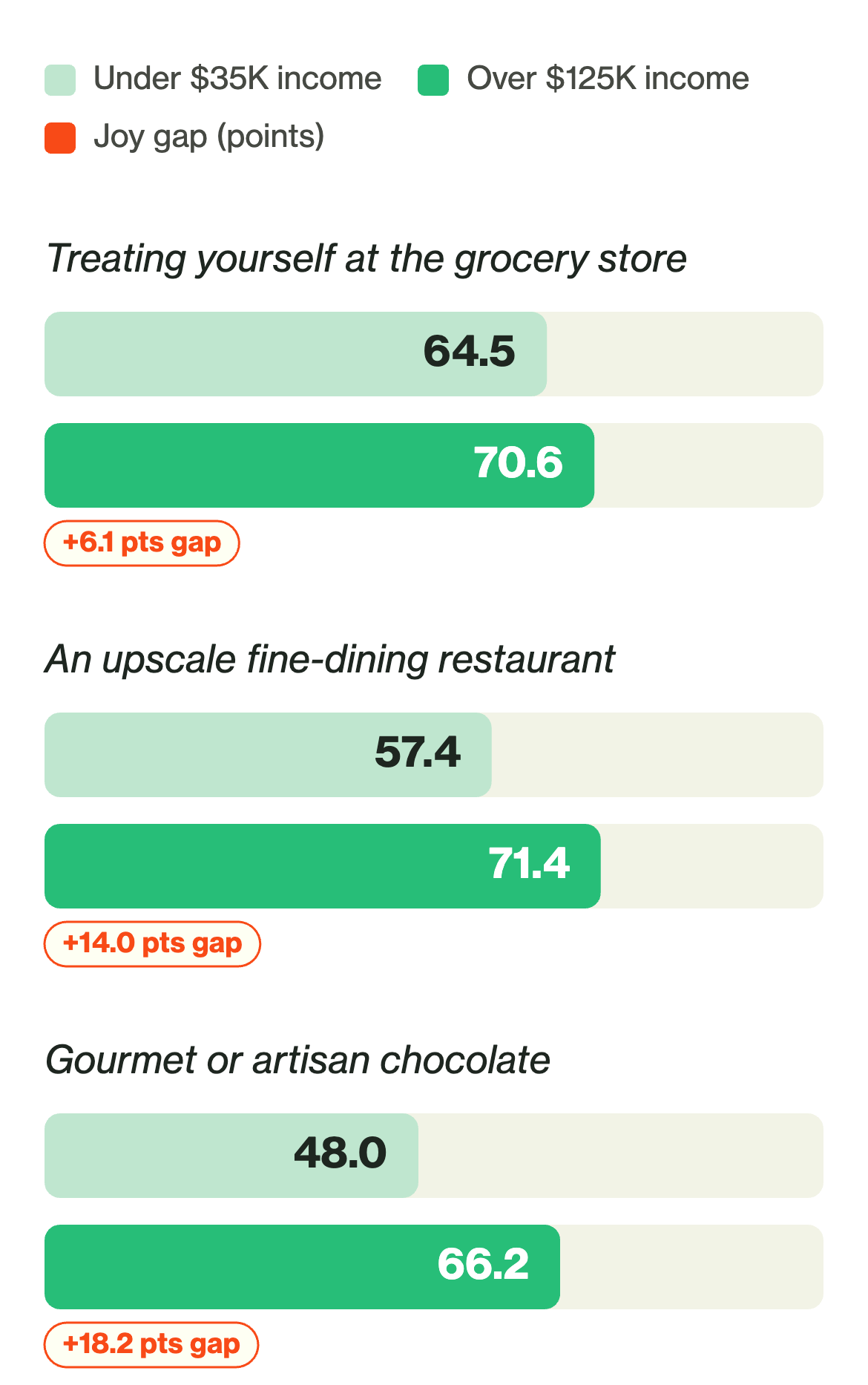
The treat moment scores nearly the same joy across every income bracket in the country. The person earning $28,000 and the person earning $140,000 are having essentially the same psychological experience when they reach for something special in the grocery store.
The occasion is democratic. The premium frame isn’t.
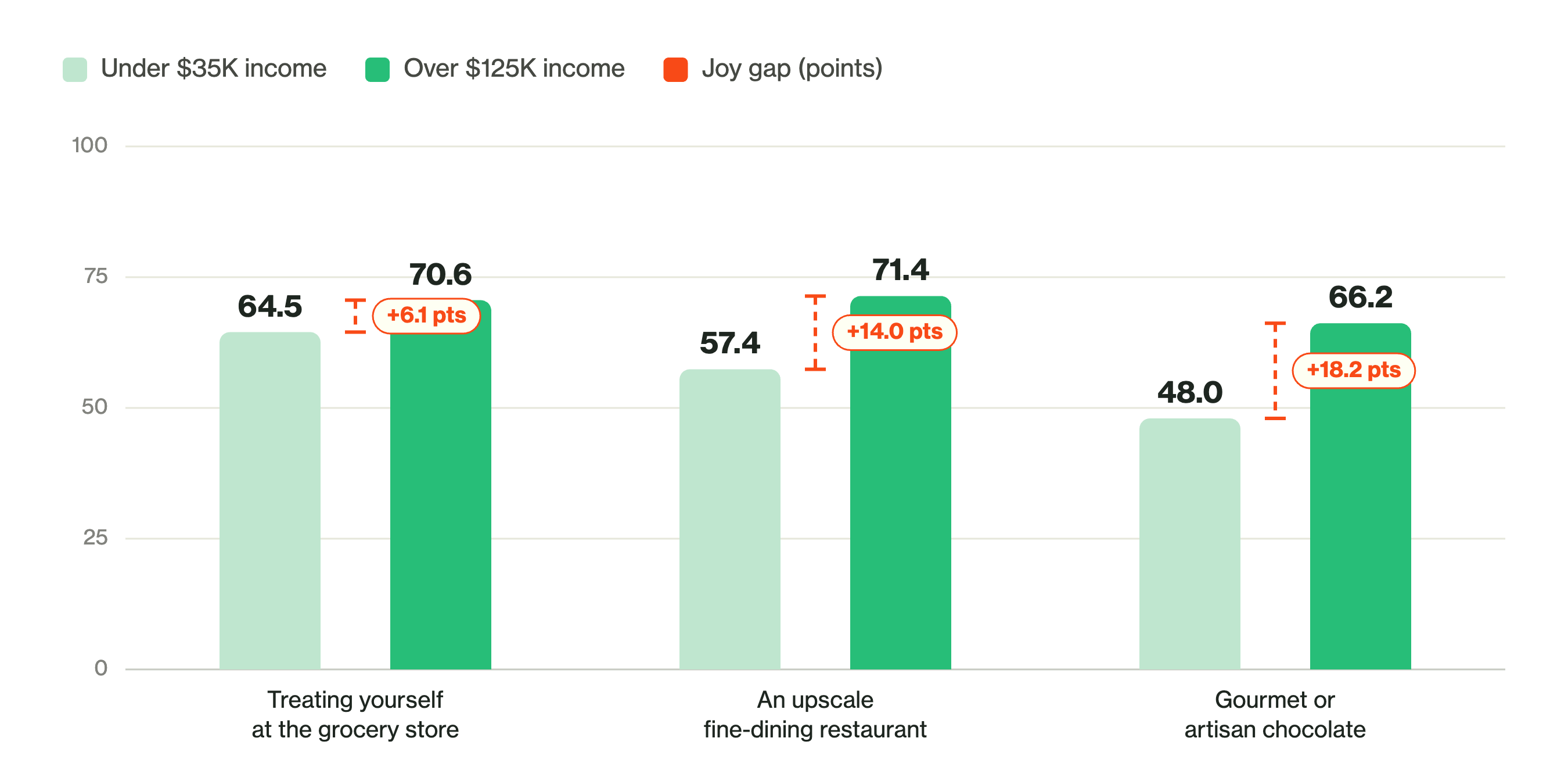
Source: PETERMAYER Brand Joy Lab, 2026 · n=391–1227
But the further a category drifts from the everyday, the wider the gap grows.
The lower your income, the less joy you expect from higher-priced items. This is true in CPG (we used premium chocolate as an analog) as well as in dining. Even when a working- or middle-class consumer wants to treat themselves, premium brands seem out of reach.
the feeling is democratized.
the brands are not.
Premium brand messaging tends to take one of two directions: a product created to fuel your body’s performance, or branding meant to serve as a badge of quality and status.
Each strategy misses a core reason we indulge: comfort. We analyzed more than 6,500 consumer responses to food questions in the Brand Joy Lab. Apart from taste, the feeling of tranquility and comfort arises more than any other emotional register.
When we look at occasions, nearly half of all snackers—48.6%—regularly eat to relieve stress or find comfort. When we asked snackers whether social perception influences their purchase decisions, 53.3% said it plays no role whatsoever.
Consumers navigating this tension are not asking "does this make me look successful?" They are asking "is this worth it for me, today?"
Fuel and status have claimed the creative territory that consumers already acknowledge. Comfort is the territory they act on every week.
And it’s there for the taking.
The largest behavioral group in the snacking category is people who eat to manage how they feel. They want to relieve stress, to find comfort, to get through the afternoon.
Who is speaking to them?
The category’s two dominant creative ideas—fuel and status—are both oriented around a person who has already decided they deserve something, in a moment that justifies it. We see them in a post-workout pant. Or we get to drop into their aspirational kitchens. Neither speaks to the person who just needs the afternoon to be slightly less heavy than it’s been.
I make lists and buy food that tastes good or is new. It makes me feel in control when I'm really not — and the food makes me feel like it's the only thing that stays good in life.
When I'm stressed, I usually treat myself to a warm drink — like a fancy latte or a big cup of hot chocolate. There's something comforting about holding it in my hands and just taking a moment to breathe.
That person is not hard to reach. They’re in the store every week. They are the household’s primary food buyer. And three things in the data point to exactly how a brand gets in front of them.
The comfort snacker scores significantly higher on eating at home and snacking at home than any other context. They are not consuming for an audience. Advertising that frames the product as visible, social, or identity-signaling misses them entirely.
The comfort snacker’s own language does not talk about deserving something or earning a treat. It talks about feeling better, feeling lighter, feeling steady. This is a private act of self-care and it is the register the category has never learned to speak.
The income gap on protein bars is 38 points. On Greek yogurt it is 22 points. On chips it is effectively zero. Lower-income shoppers feel the same pull toward treating themselves as everyone else. They simply do not feel invited by the products positioned to serve that moment.
Based on our analysis of industry creative, few, if any, brands are basing their approach on the comfort their products can bring.
For premium food brands, fuel and reward are not wrong strategies, but they’re highly contested.
They work for the audiences they’re built for, but together they have created a blind spot large enough to fit an entirely different brand story. One about steadiness rather than performance, self-care rather than aspiration, the small act of saying yes to yourself on an ordinary Tuesday rather than an earned occasion.
Half of Americans are ready for this message. People across the economic and demographic spectrum.
The brand that brings joy in these specific moments can earn the credit that no one else is trying to claim.
Half of America is already reaching for comfort. Almost no one is speaking to them.

