.png)
Hotels still rule the overnight stay. But there’s room for more disruption.
A Brand Joy Lab study finds parity in the joy people get from their accommodations, as long as they’ve tried them first.

The story of the hospitality industry in the 21st century is layered with disruption. After an un-contested run as America’s preferred hospitality format, hotels have seen insurgent challengers rise from single mattresses to global booking empires.
But a new Brand Joy Lab study shows the persistent staying power of the hotel stay. More than two thirds of Americans have stayed in one in the last five years, versus the 36% of people who have stayed in a vacation rental, like an AirBnB or VRBO.
Hostels, a larger segment overseas, drew just 9% of Americans over the same period.
But the hotel strength masks a significant threat. Brand Joy Lab also picked up on a trend that might give vacation rental—and hostel—brands reason to believe they can steal share.
Guests at each format experience almost the same magnitude of joy.
Hotels win on prevalence.
They do not win on joy.
People get joy from what they know. Experience turns out to predict joy across lodging better than anything else we measure. Whatever the format, the people who have stayed find joy in it, and nearly the same amount of it.
The formats differ only in the promise each one keeps. Hotels deliver depth of comfort, and rentals a place to live. Hostels deliver belonging, and to the people who have never gone, none of it shows.
Set the three formats side by side and the pattern that jumps out has nothing to do with price. Among people who have actually stayed, a hotel, a vacation rental, and a hostel all land within two points of one another, near 75 on the Joy Index, where the maximum is 100. For those who haven’t checked in, their anticipated joy runs much colder.
This suggests a similar end-state for all three lodging types, despite their relative popularity.
Once you have stayed, every format delivers the same joy
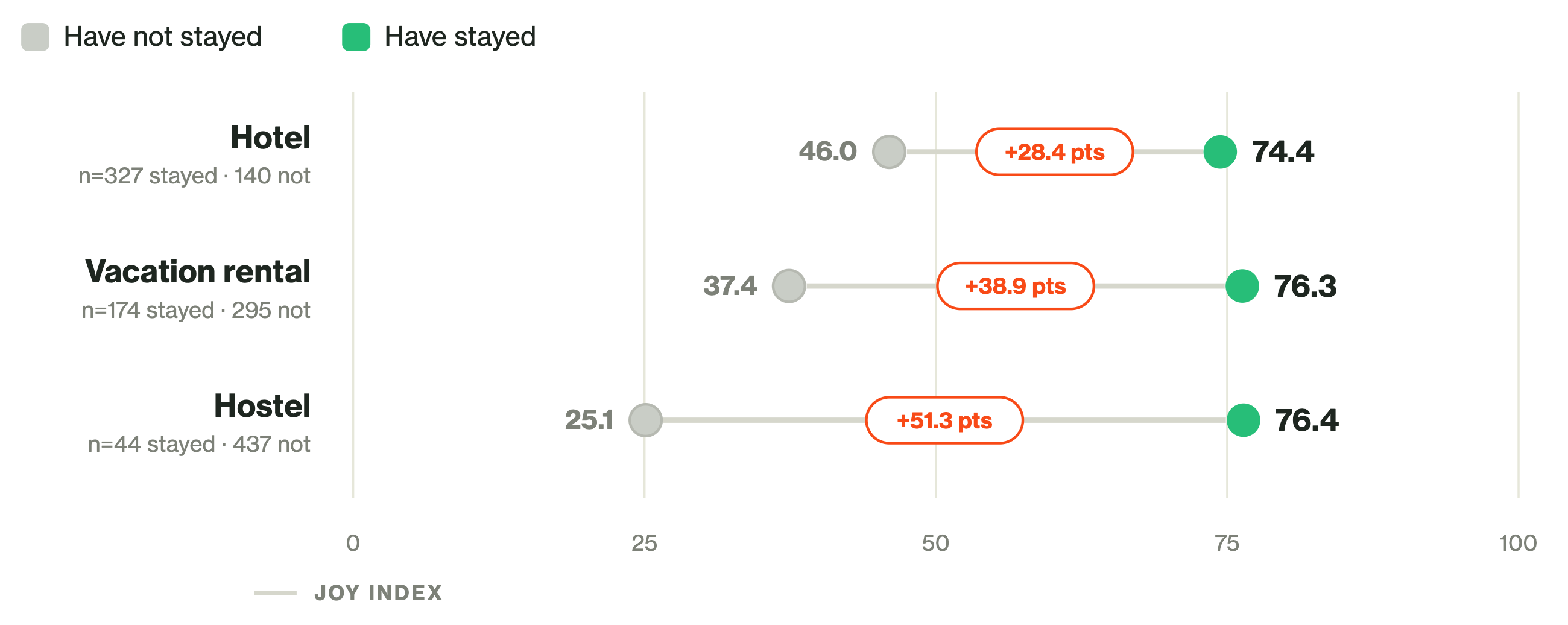
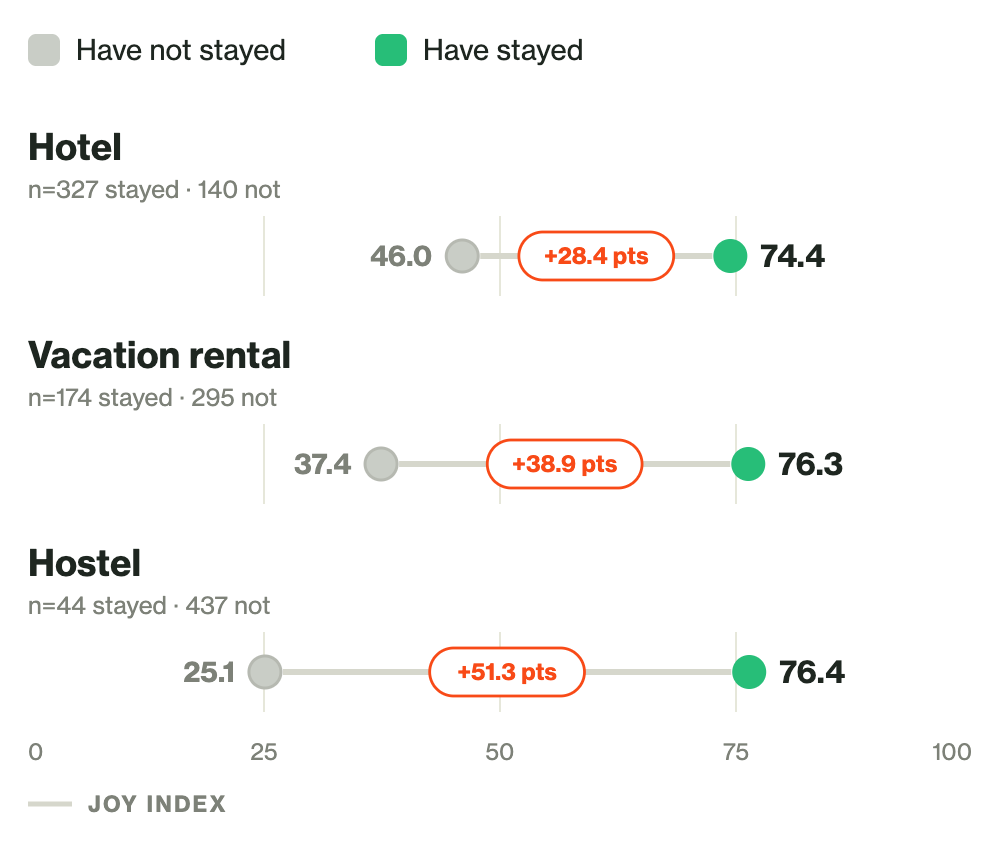
Source: Brand Joy Lab national panel, August 2026 wave, n≈484 U.S. adults. Joy Index (max 100) shown.
That gap has a plain source. Almost everyone has slept in a hotel, about a third in a rental, and fewer than one in ten in a hostel. So each format’s headline joy comes out as a blend of a warm number from the few who know it and a cold one from the many who are guessing, mixed in wildly different proportions. The averages were measuring familiarity all along.
Almost no one has firsthand experience of a hostel
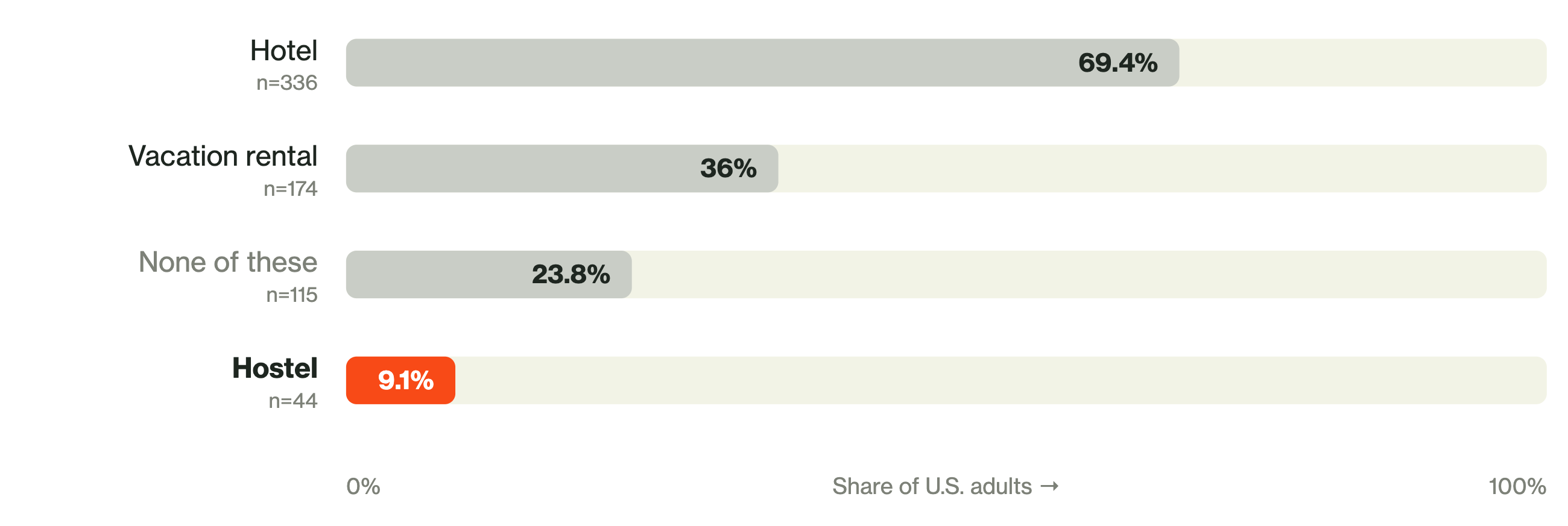
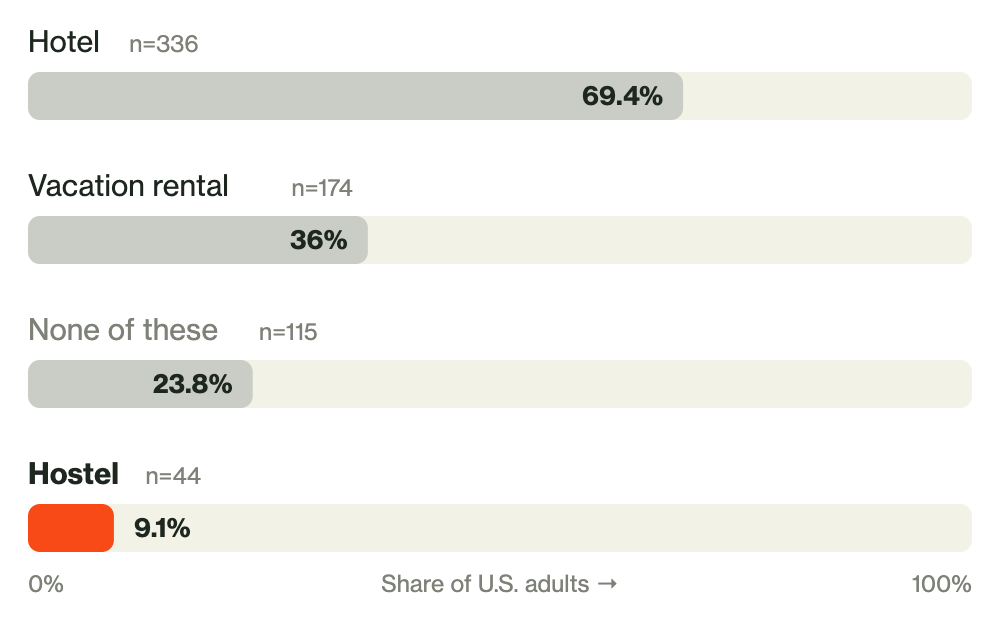
Source: Brand Joy Lab national panel, August 2026 wave, n=484 U.S. adults. Lodging types stayed in are select-all, so shares do not sum to 100.
But experience is not everything. People expect very different things across every format, and what they expect is largely a factor of whether they’ve ever checked in.
Below we look at all three categories to understand how perceptions change once people experience the format.
Take hotels, the format almost everyone knows. What separates a guest from a non-guest comes down to the specificity of the comfort they count on. People who have stayed expect secure storage, a genuinely quiet night, privacy, a working connection, at rates far above those who have not.
A hotel sells being taken care of, and experience fills in the fine print of that care. The advantage stays quiet because it hides in details a person only learns to want once they have had them.
Hotel guests expect a more specific kind of comfort
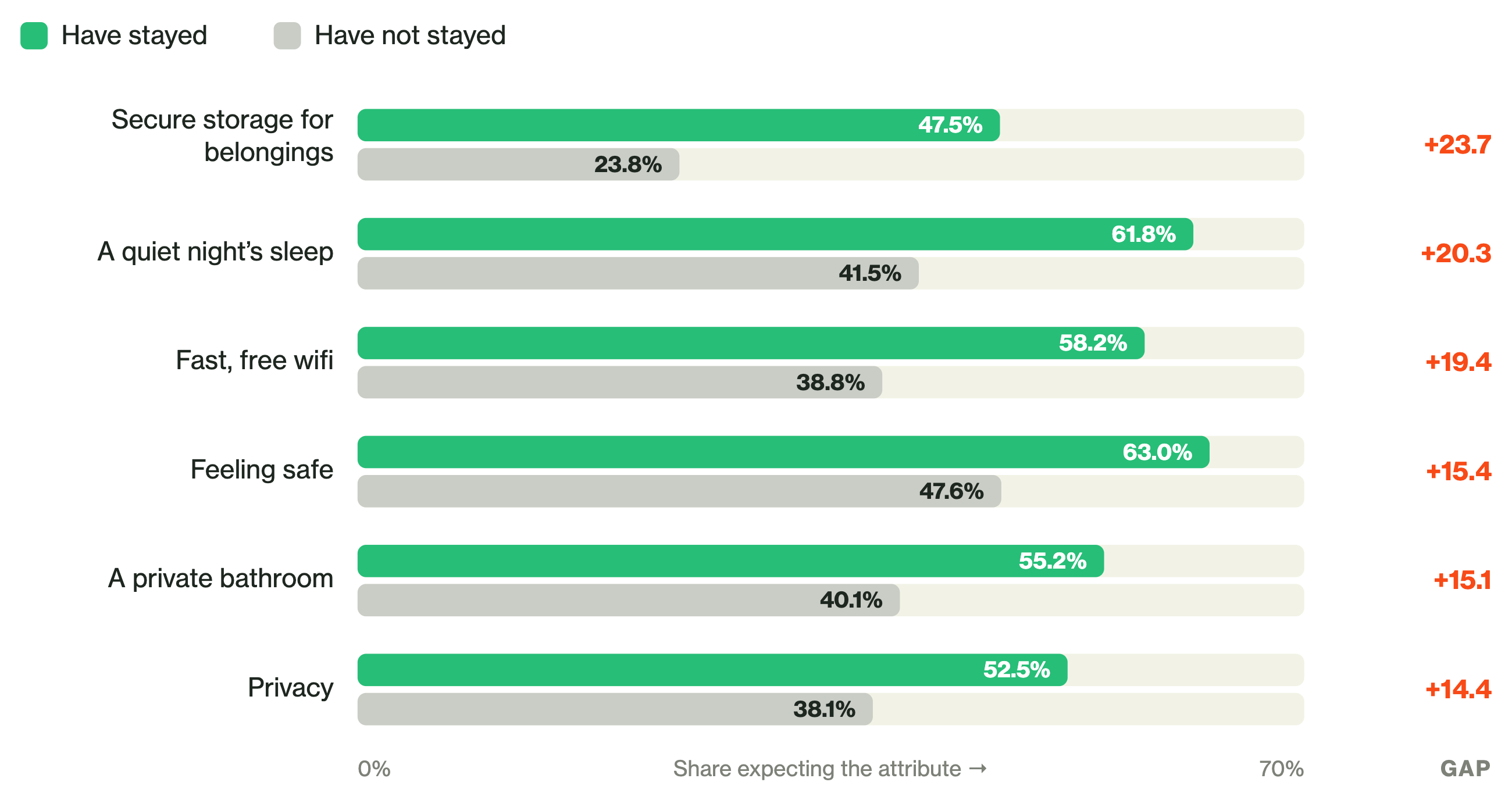
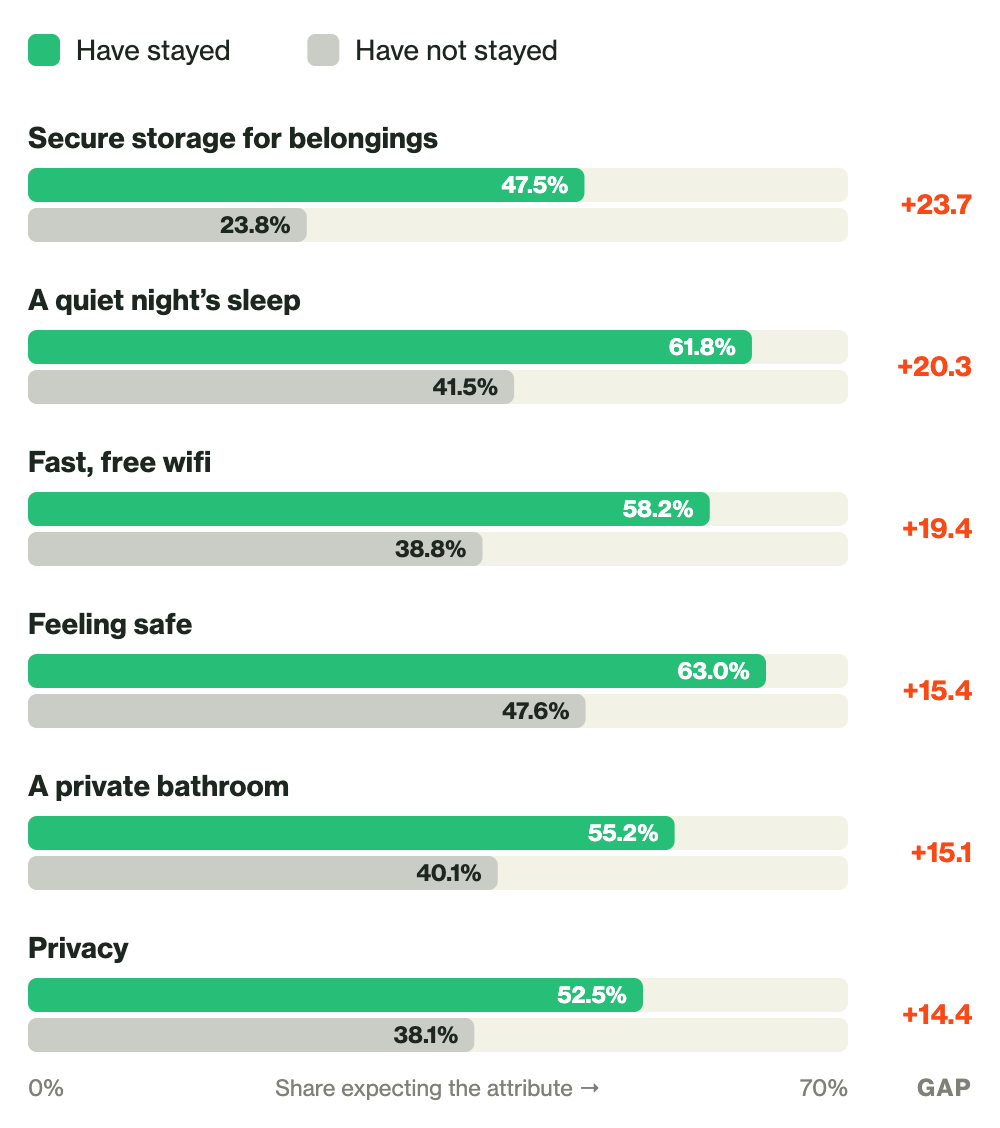
Source: Brand Joy Lab, August 2026 wave. Stayer n≈327, non-stayer n≈140. Ranked by the gap between guests and non-guests.
Rentals teach a different lesson. Their joy climbs by nearly 40 points once someone has booked one, and the expectation moves from a place to sleep toward a place to live. Guests arrive picturing comfortable common space and real storage, down to a quiet room of their own.
They also expect the one thing first-timers almost never picture: meeting new people. A rental competes less with a discounted hotel than with a family cabin weekend, the kind of gathering that already scores among the highest joys we measure. People who have not stayed see a house. People who have know it becomes a place to live together for a while.
Guests see a place to live. Everyone else sees a house.
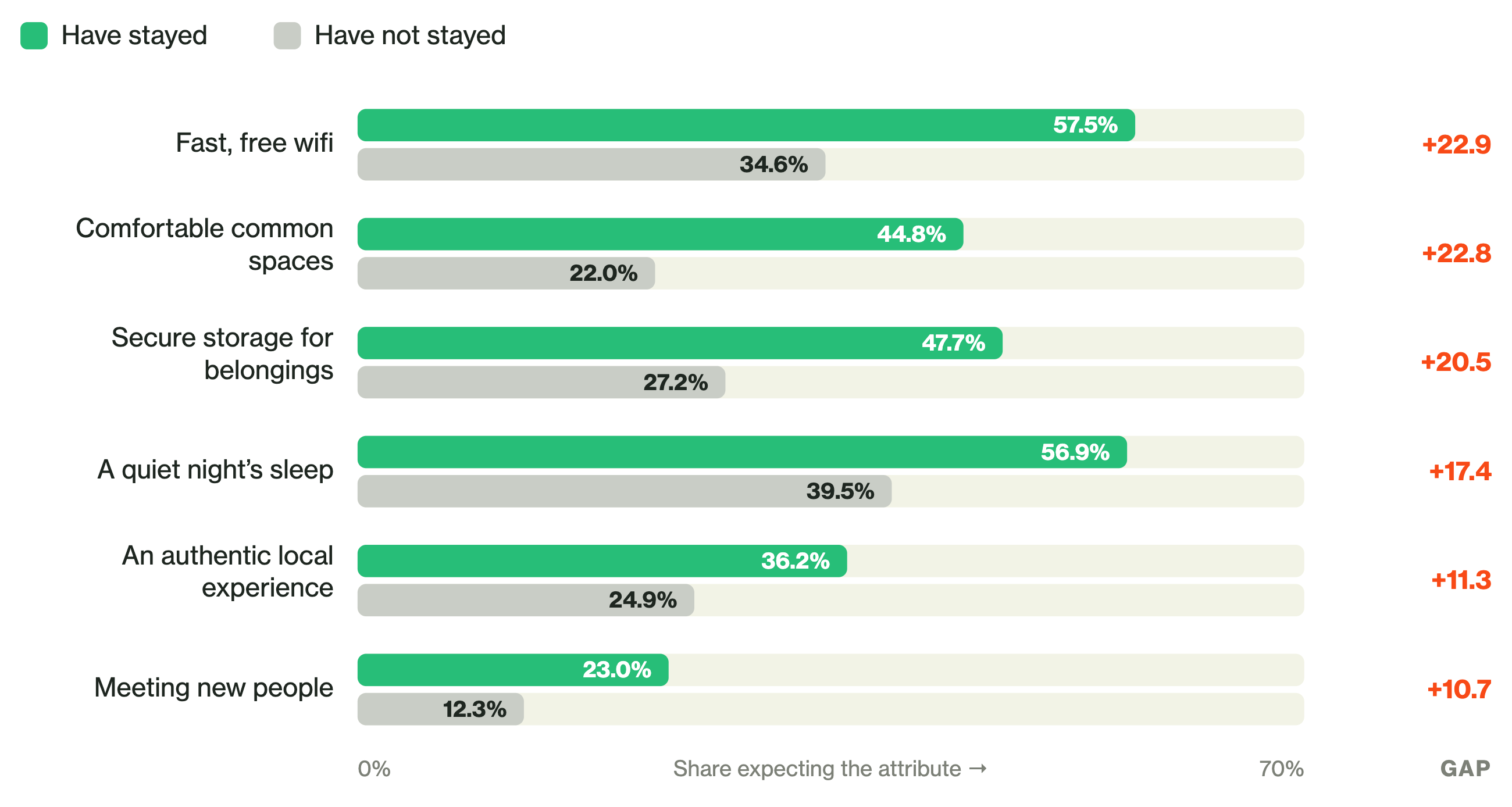
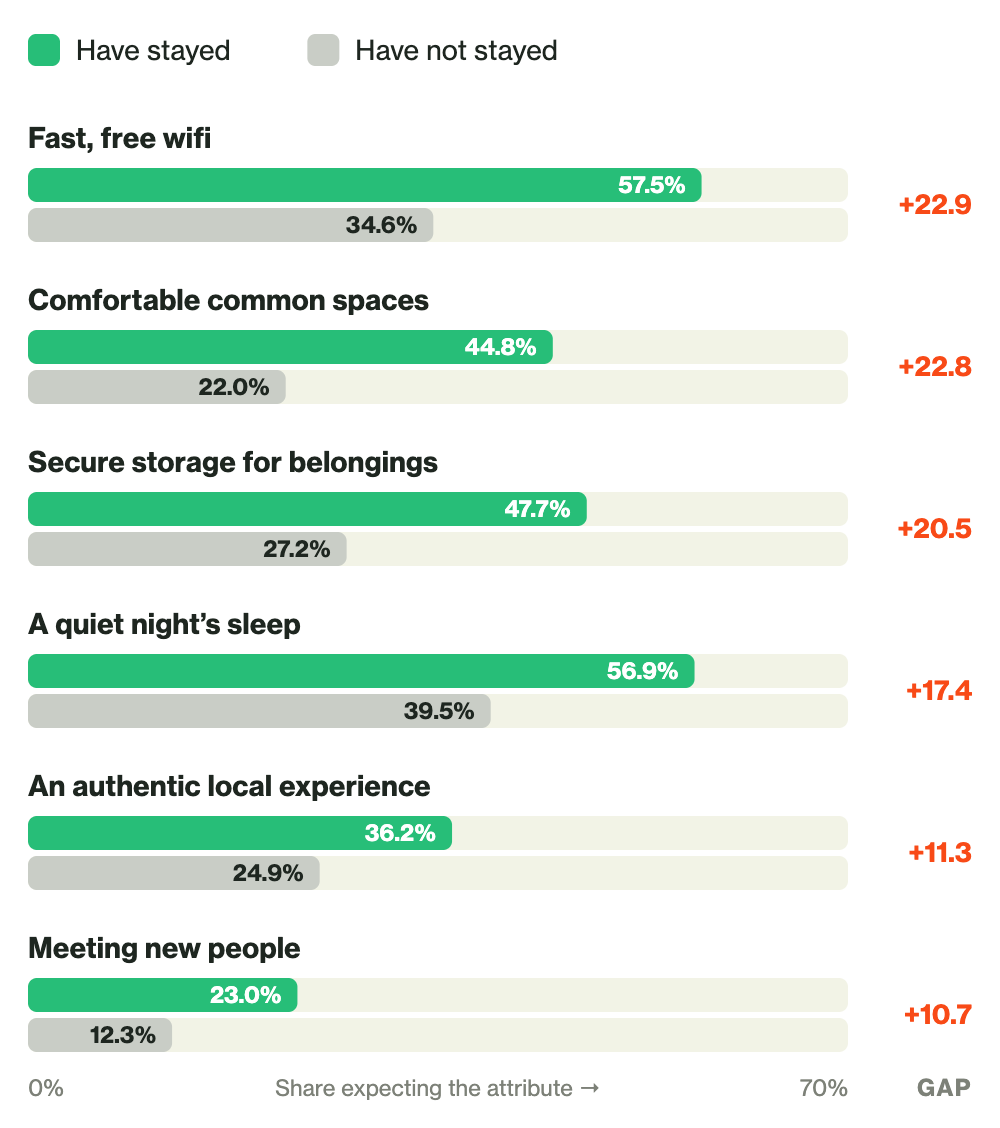
Source: Brand Joy Lab, August 2026 wave. Stayer n≈174, non-stayer n≈295. Common spaces and meeting new people are the most underrated.
Hostels make the sharpest case of all, because experience does more than deepen the expectation here. It inverts it. Fewer than one traveler in ten has stayed in a hostel, so nearly every impression forms from imagination, and imagination fixes on price.
Ask the people who have actually stayed and the price frame falls away: their expectation of a low price drops seventeen points, and no hidden fees drops fourteen. In its place rise other expectations, comfortable common space and the draw of a central, authentically local place to be.
Experience moves the hostel from “cheap” to “connected”
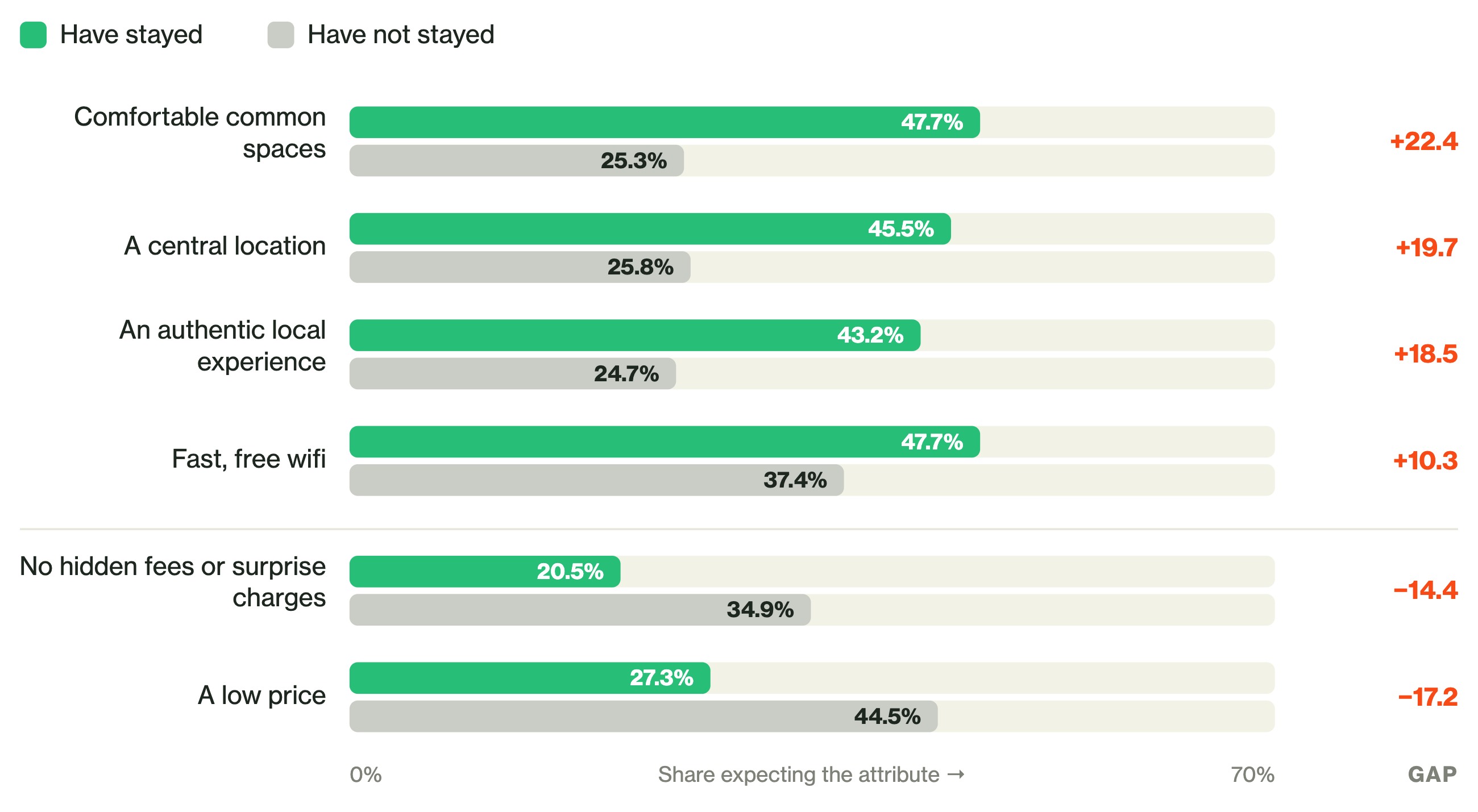
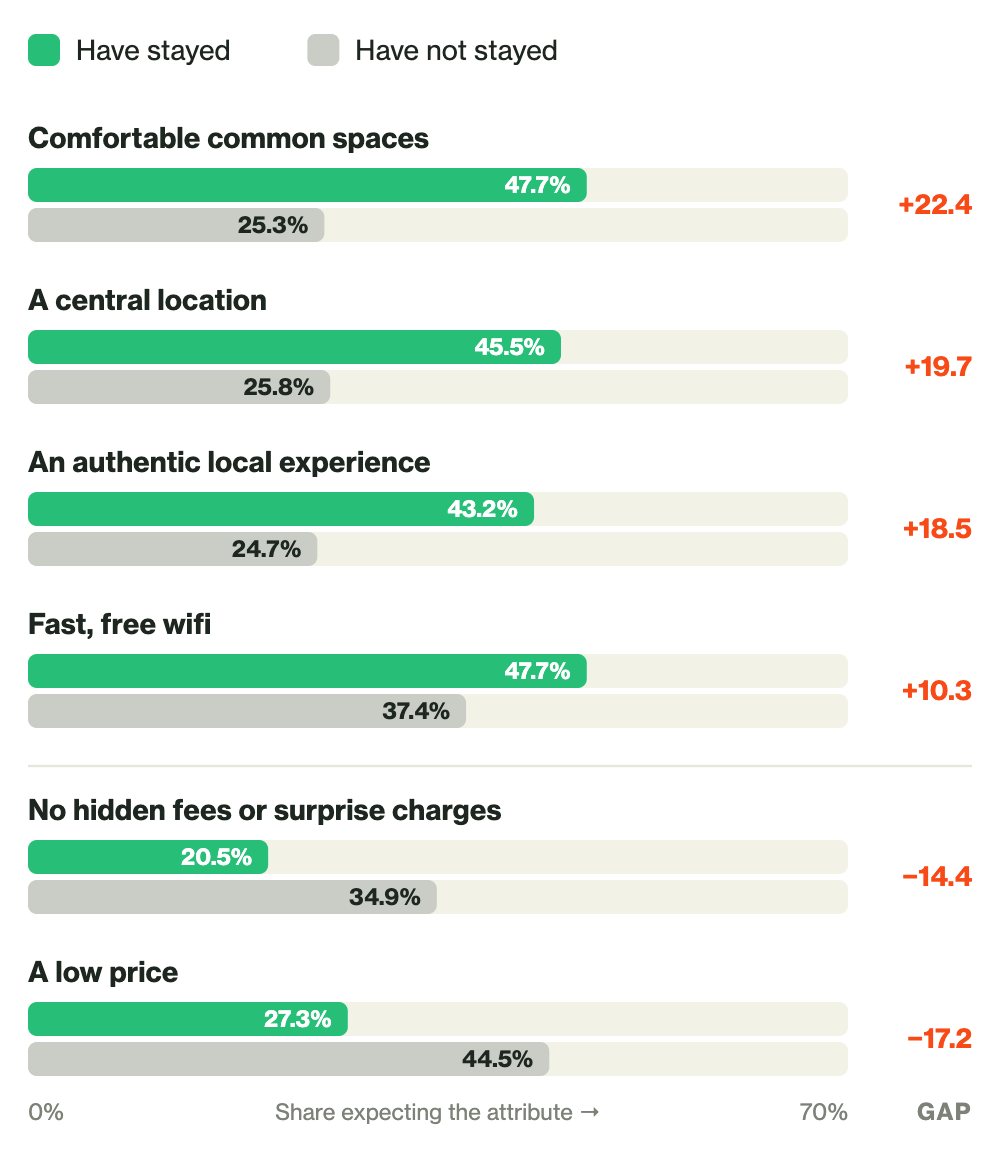
Source: Brand Joy Lab, August 2026 wave. Stayer n≈44 (directional), non-stayer n≈438. The belonging attributes rise with experience; the two price attributes fall.
The budget bed belongs to the non-stayer’s idea of a hostel. To a guest, the format sells belonging and place, and it returns a joy score equal to a hotel’s. That reversal marks the hostel as a disruptor rather than a discount tier. The value already sits there, waiting behind a story its own guests have stopped telling.
Experience does more than raise the joy a format returns. It raises the odds a person comes back to it. Among people who have stayed, the share who would consider the format again runs near total, above 90 percent for all three. Whatever doubt a traveler carried in, a good stay resolves it.
Openness runs well ahead of trial
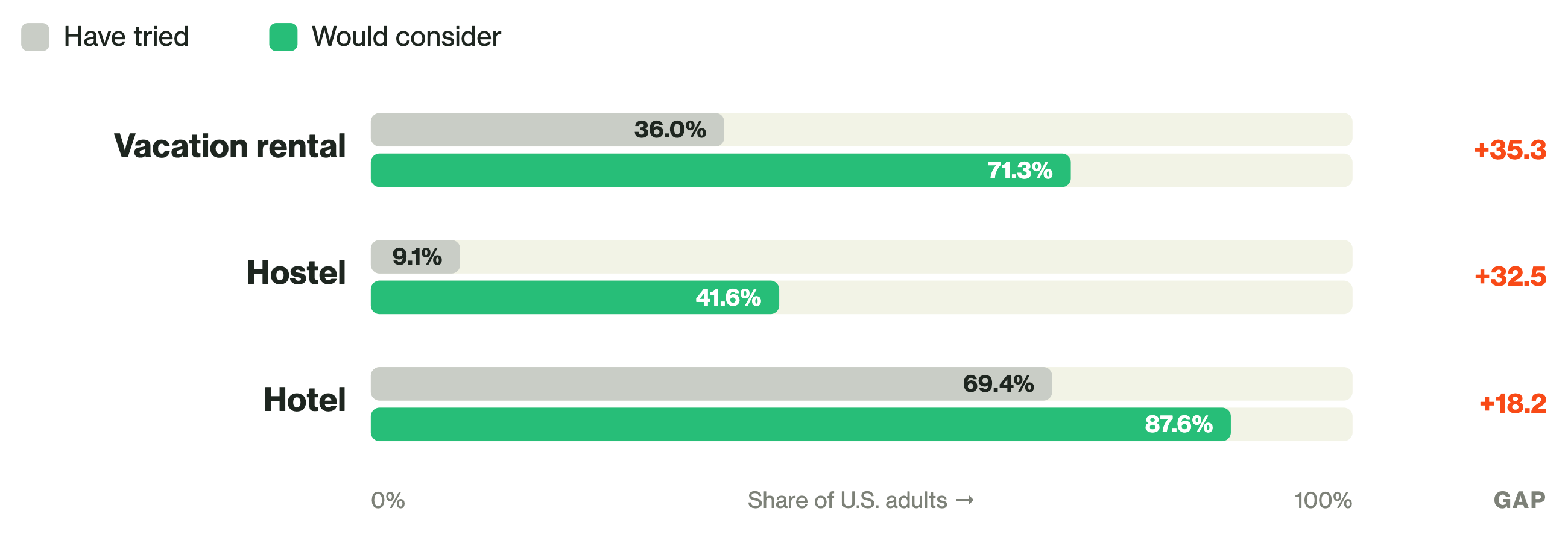
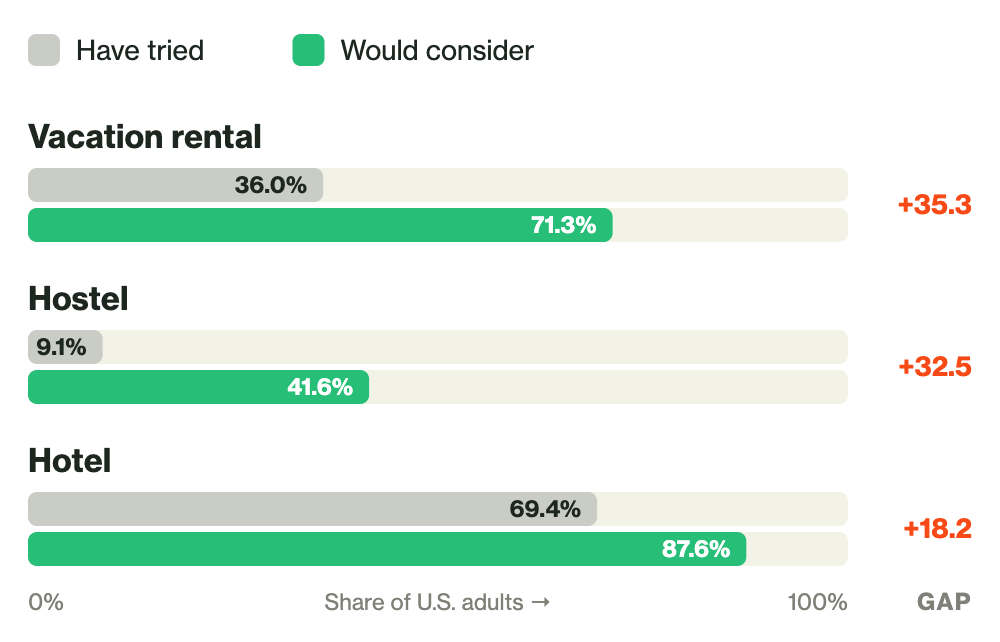
Source: Brand Joy Lab, August 2026 wave. Would consider = very likely + somewhat likely. Consideration base ≈478–482 answered per format; trial base 484. Hostel trier cell (n=44) reads as directional.
That reframes the low trial numbers as a floor rather than a verdict. Only 9 percent of people have stayed in a hostel, yet 42 percent would consider one, more than four times the current base. Rentals tell the same story at larger scale, with 36 percent having booked one and 71 percent open to it. Most of that openness sits with people who have never gone, the exact audience whose joy jumps once they do. The appetite for both formats already exists in the market. A single gap holds each back: the distance between willing and tried.
The lesson runs against the way the category talks about itself. Lodging gets sorted on a ladder of price and polish, but the joy data reads it by familiarity and by promise. Each of these three formats delivers, and delivers well, to a different set of expectations, and each keeps its best card face down until a guest arrives to turn it over. For any operator, the task has less to do with climbing the ladder than with letting people discover, before they book, the thing they could only come to know by staying.
Brand Joy Lab national panel, August 2026 wave, n≈484 U.S. adults. Joy Index runs from −60 to 100. Stayer status reflects self-reported stays on a leisure trip within the past five years. Expectation and barrier items are select-all, so the base for each percentage is the respondents in that group who answered the question. Person-centered deviation analysis confirms the stayer lift holds after controlling for general joy appetite: hostel deviation −0.1 (stayed) versus −34.7 (not stayed); rental +4.9 versus −17.5; hotel +8.3 versus −4.1.
Cite as: Brand Joy Lab, PETERMAYER. “Trial by Sleep.” August 2026.
Openness runs well ahead of trial. Help travelers discover the stay before they book.

